
SPAST WEBINAR SERIES
Digital Health Day: Monday, November 10, 2025
Organize By:
Digital Health Day

Digital Health Day: Monday, November 10, 2025
Webinar: AI-Powered Tonoarteriography for Digital Cardiovascular Health
This talk explores the critical role of health engineering in meeting modern healthcare demands. We will introduce a convergence approach that integrates technologies across biological scales, from molecules and cells to organs and systems, to advance digital health and cardiovascular disease prevention. Focusing on Tonoarteriography (TAG), an innovative technology for unobtrusive arterial blood pressure measurement, we will discuss its “SUPER-MINDS” design principles for developing wearable and cuffless monitors. The discussion will then extend to how the TAG platform synergizes nano-biomarker detection, medical imaging, and AI models for the early detection of acute cardiovascular and cerebrovascular events. Using atherosclerotic plaque assessment as a case study, we will demonstrate how this convergent strategy enables a new health paradigm that is predictive, preventive, precise, pervasive, personalized, participatory, proactive, and patient-centered—the transformative “8-P” model.
Time region
12:30 UTC, 13:30 CET, 7:30 EST
Passcode: .wtG$2LX

Digital Health Day: Monday, November 10, 2025
Webinar: Digital health systems and multi-source health/environmental data: New insights in NCD management through AI driven diagnostics and predictive models
Dr. Maglaveras will present the current state-of-the-art in personalized health care by presenting cases from COPD, COVID-19 and CVD patients using advanced wearable vests and new technology sensors integrating multiple biosignal recording on each sensor including lung sounds, heart sounds, EIT, ECG/arrhythmias, cardiac and lung ultrasound analytics and new outcome prediction models in COVID-19 ICU patients fusing X-Rays, lung sounds and ICU parameters transformed via AI/ML/DL pipelines, new approaches fusing environmental stressors with -omics analytics for cardio-respiratory chronic disease management, and finally new ML/AI driven methodologies for assessment of mental health diseases including suicidality, anxiety and depression.
Time region
20:00 UTC, 21:00 CET, 15:00 EST
Passcode: .wtG$2LX
Friday, April 25, 2025, at 11:00 AM Eastern Time (UTC-4)
Organize By:
Esteban Pino
University of Concepción
Chile
TIPPSS for Connected Healthcare Systems – Improving Trust, Identity, Privacy, Protection, Safety and Security
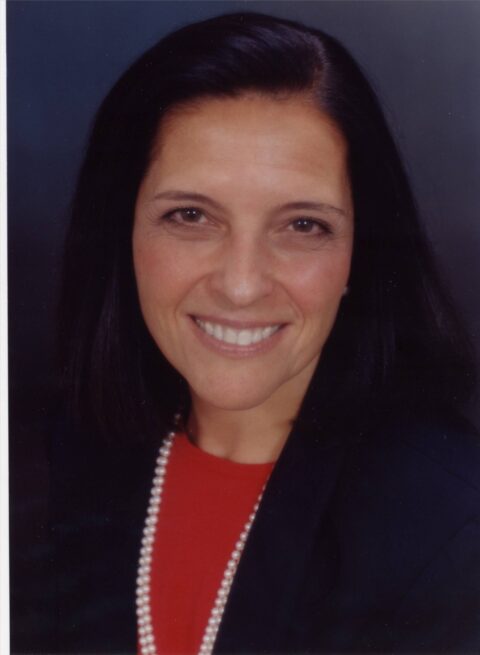
Florence Hudson is executive director of the Northeast Big Data Innovation Hub at Columbia University, and founder and CEO of FDHint, LLC, a global advanced technology and diversity and inclusion consulting firm. She is a former IBM vice president and chief technology officer, Internet2 senior vice president and chief innovation officer, special advisor for the NSF Cybersecurity Center of Excellence, and aerospace engineer at Grumman and NASA. She chairs the global IEEE/UL P2933 working group on Clinical IoT Data and Device Interoperability with TIPPSS – Trust, Identity, Privacy, Protection, Safety and Security, and has published books on TIPPSS. She serves on boards for Princeton University, Cal Poly San Luis Obispo, Stony Brook University, Blockchain in Healthcare Today, and the IEEE Engineering in Medicine and Biology Society. She has a B.S.E. in Mechanical and Aerospace Engineering from Princeton University, and executive business education from Harvard and Columbia universities.
Connected healthcare solutions are increasingly leveraging advanced technologies and data to improve insights and outcomes, but this can also increase risk. The increasing digitization of the healthcare continuum is creating new risks in the compromise of data, devices and systems. The new IEEE 2933™-2024 Clinical IoT data and device interoperability with TIPPSS standard aims to enable increased Trust, Identity, Privacy, Protection, Safety and Security (TIPPSS) for humans, data, devices, systems and organizations in this increasingly connected world. It applies to patients, data, devices, providers, and healthcare systems. The Speaker, Florence Hudson, is the Chair of the standard working group and will share the goals, scope and elements of the standard for clinical IoT, and the envisioned TIPPSS efforts for all cyber-physical systems, from connected vehicles to the smart grid, smart cities, agriculture, and your industry of choice. The IEEE 2933™ Working Group is receiving the IEEE SA Emerging Technology Award for the development of IEEE 2933™-2024, the IEEE Standard for Clinical Internet of Things (IoT) Data and Device Interoperability with TIPPSS—Trust, Identity, Privacy, Protection, Safety, Security.

March 25th 2024, 12:00 Pacific Time (UTC - 7)
Organize By:
Esteban Pino
University of Concepción
Chile

Standardized Representation for Patient-Generated Digital Health Data
Simona Carini is a research assistant in Dr. Ida Sim’s research lab at UCSF, where she has been a principal contributor to the Trial Bank Project, the Ontology of Clinical Research (OCRe), the Human Studies Database (HSDB, the data federation project for the Clinical and Translational Science Awards, CTSA) and other projects.
For the past ten years, she has been involved in the definition of data schemas for semantic interoperability of digital health solutions for Open mHealth and then also for the IEEE P1752 Open Mobile Health Working Group, for which she also serves as Secretary. IEEE 1752.1 (Representation of Metadata, Sleep and Physical Activity Measures) was approved in 2021. She actively fosters the development and implementation of standard representation of digital data to facilitate wider use of such data in self- and clinical care.
Patient-generated data (PGD) provide a remote window into patient health states and allow the development of digital biomarkers. Large amounts of data from different sources (including wearables, apps, patient questionnaires, etc.) need to be aligned, harmonized, and combined. Standards are needed for interoperability for such work, including, structural interoperability, semantic interoperability and relevant context. Simona’s talk will provide an overview of the work done by Open mHealth and the IEEE P1752 Open Mobile Data working group.
Follow us